Resident Physician Stony Brook University, United States
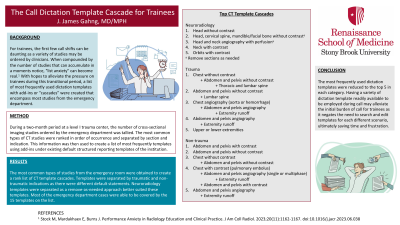
Purpose: For trainees, the first few call shifts can be daunting as there are variety of studies that may be ordered by clinicians. When compounded by the amount of studies that can accumulate in a moments notice at a busy institution, "list anxiety" can become real. With hopes to alleviate the pressure on trainees during this time, dictation templates with multiple add-ins that encompass the most common studies from the emergency department were developed in a systematic fashion.
Methods/Materials: During a two month period at a level I trauma center, the number of cross-sectional imaging studies ordered by the emergency department was tallied. The most common types of studies and indications were ranked in order of occurrence and divided into modality groups. This information was then used to create dictation templates using the existing default structured reporting templates of the institution.
Results: The most common types of studies from the emergency room were obtained to create a cascade of CT studies were created that begin with a CT without contrast and has add-ons including without and with contrast, angiographic studies, with delayed runoff all in different body parts such as head, neck, chest, abdomen, and pelvis. Different study indications were considered to include additional information required such as organ injury grading for trauma scans.
Conclusions: Having a systematic dictation template employed for a variety of studies during call may alleviate the initial burden of call for trainees as it negates the need to search and edit templates for each different scenarios, saving time and frustration.